Nursery Bedding · A Practical Guide
Naturepedic Crib Bedding: Comparing Flat and Fitted Moisture Layers
In a thoughtfully prepared nursery, the smallest details often do the most useful work. A crib moisture pad is one such layer: discreet beneath the fitted sheet, it helps shield the mattress from everyday spills while keeping the sleep surface orderly. Naturepedic’s flat and fitted formats approach that task differently. The right choice comes down not to appearance alone, but to placement, laundry habits, mattress fit and the instructions that govern a safe crib setup.
A quiet layer with a practical purpose
Crib bedding is most successful when it is simple, easy to care for and suited to the mattress it covers. A moisture layer sits between the mattress and the fitted crib sheet, creating a washable surface that can help protect the mattress from liquids and routine wear. It is not a sheet, a mattress topper or a substitute for the mattress itself. Its purpose is more modest: to add a protective layer without making the bed feel complicated.
That distinction matters in a nursery. Parents and caregivers may be changing sheets more frequently than they expected, and a layer that is easy to lift, wash and return to the bed can make the routine feel more manageable. Yet convenience should never take precedence over fit. Whatever the format, the pad and sheet must be compatible with the mattress and used according to the manufacturers’ directions.
Naturepedic offers two approaches described here: a flat waterproof crib moisture pad and a fitted waterproof crib moisture pad. Both use soft organic cotton flannel as the surface layer, organic cotton muslin on the underside, and a thin waterproof layer between them. Both are designed for a standard crib mattress measuring 28 by 52 inches and are machine washable and dryable, according to their product descriptions. Their key difference is how they are secured on the mattress.
The flat crib pad: a layer placed with intention
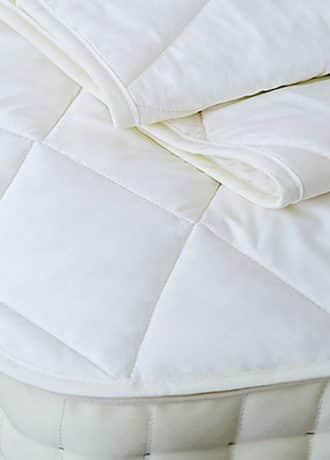
A flat crib pad is laid on top of the mattress, beneath the fitted sheet. Its construction is a soft sandwich: flannel on the side facing the sheet, muslin underneath, and a thin waterproof membrane between the cotton layers. In the Naturepedic flat version, there is no elastic all the way around to anchor it to the mattress. It is therefore important to position it carefully and follow the maker’s directions for use.
The flat format may appeal to households that prefer a simple layer that can be lifted away when laundering is needed. With no fitted skirt to stretch around the mattress, placement is straightforward in concept: center the pad, smooth it flat, then cover it with the fitted sheet. The appeal is its uncomplicated construction. The consideration is that the pad itself is not secured by a full elastic edge, so careful placement and attention to the sheet-and-mattress combination are essential.
In a busy nursery, a flat layer can also be convenient to handle on laundry day. It can be removed separately from the sheet, washed as directed and returned to the bed once it is completely dry. That ease, however, does not change the need to maintain a snug, smooth sleep surface. A pad that shifts, bunches or is used in a way the manufacturer does not recommend is not a useful shortcut.
Think of the flat pad as a washable protective layer rather than a loose accessory to be adjusted casually. Before use, check the product instructions, confirm the dimensions against the crib mattress and make sure the fitted sheet covers the pad securely. If the product directions call for a particular positioning method, follow that guidance rather than relying on habit or assumptions.
The fitted crib pad: elastic for a more anchored fit
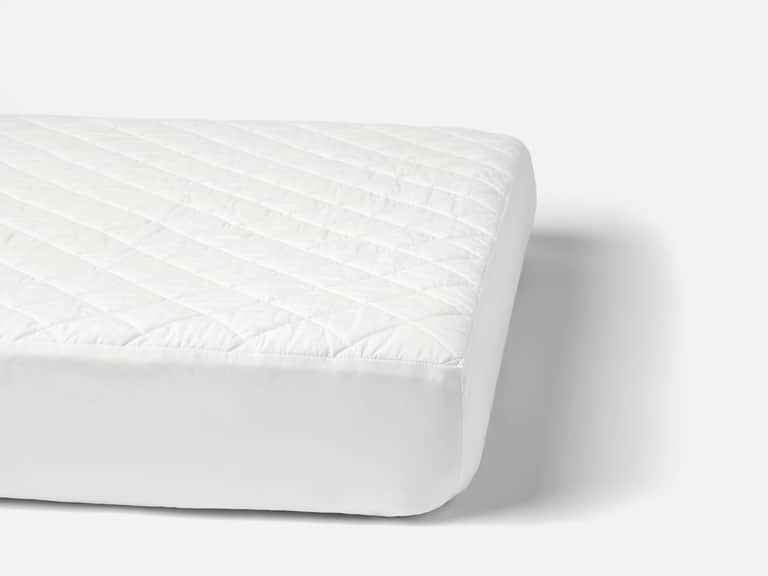
The fitted Naturepedic moisture pad uses a similar set of materials and the same stated crib dimensions, but it adds elastic all the way around. That elastic is intended to hold the pad snugly on the mattress. For caregivers who value a layer that wraps around the mattress rather than simply resting across its surface, the fitted style can feel more intuitive during bed-making.
Its practical advantage is the familiar choreography of a fitted layer: align the corners, stretch the elastic around the mattress and smooth the surface before adding the fitted sheet. The all-around elastic is designed to help the pad stay in place. It does not, however, eliminate the need to check the fit. The mattress, moisture pad and sheet should work together without excess material, looseness or bunching.
The fitted option may also suit a household that prefers to treat the moisture pad as a more permanent part of the bed’s foundation, laundering it when needed rather than repositioning it each time the sheet is changed. That preference is personal; the important point is to keep the sleep surface neat and to follow each manufacturer’s care and use instructions.
Elastic construction can make the pad feel more secure during installation, but it does not make every mattress combination automatically compatible. Crib mattresses can vary in thickness and construction. Check the mattress dimensions and the pad’s stated specifications before use, and make sure the fitted sheet still fits properly over both layers.
At a glance: flat versus fitted
| Consideration | Flat moisture pad | Fitted moisture pad |
|---|---|---|
| Placement | Laid on top of the mattress, beneath the fitted sheet. | Placed over the mattress and held by elastic around the edges. |
| Construction detail | Organic cotton flannel and muslin with a thin waterproof layer between. | The same described cotton layers and waterproof center, with all-around elastic. |
| Stated crib dimensions | 28 by 52 inches. | 28 by 52 inches. |
| Care | Machine wash and dry, following the product label. | Machine wash and dry, following the product label. |
| A useful deciding factor | Whether you prefer a simple layer that is placed and removed separately. | Whether you prefer elastic that wraps around the mattress. |
The comparison is deliberately practical. The descriptions do not suggest that one format is universally superior; they identify different ways to position a moisture barrier. For many families, the decision will be less about a dramatic difference in the materials and more about which design is easier to fit correctly and maintain in their own nursery.
Materials: cotton comfort, waterproof function
Both Naturepedic styles are described as having a soft organic cotton flannel top, an organic cotton muslin bottom and a thin waterproof layer between. This construction separates the feel of the sleep surface from the pad’s protective function: cotton forms the outer layers, while the internal membrane is intended to prevent liquid from passing through to the mattress.
In everyday language, “waterproof” and “breathable” are sometimes used as though they describe the same performance. They do not. A waterproof membrane is intended to block liquid; how a particular product manages water vapor, heat or airflow depends on its materials and design. The supplied descriptions identify the Naturepedic pads as waterproof and note that the thin inner layer also blocks dust mites. Those product statements should be read as features of the individual item, not as a promise to prevent allergies or address a medical condition.
Organic cotton may matter to families who are looking for specified materials and certifications. The construction description names organic cotton flannel and muslin; it also states that the pads are made without vinyl or PVC, phthalates, latex, wool and chemical flame retardants. When a material or certification is important to your decision, review the current label and manufacturer information for the specific model and size you are considering. Details can vary between product versions.
The thin central layer is also worth noting because a crib moisture pad should not be confused with a thick comfort topper. These pads are designed as protective bedding layers, not as a way to change the firmness or height of the mattress. Keeping that distinction clear helps maintain the intended arrangement: mattress, appropriate protective layer if permitted by its instructions, and a correctly fitted sheet.
Choosing the format for your nursery routine
Start with the mattress. Confirm its size and follow its manufacturer’s guidance about compatible bedding and protective layers. Then check the pad’s dimensions and installation instructions. A standard 28-by-52-inch label is useful, but the right fit depends on the actual mattress and how the product is designed to sit on it.
Next, consider how you prefer to make the crib. If you like a pad that lies flat and can be lifted away independently, the flat version may align with your routine. If you prefer elastic around the mattress, the fitted version offers that feature. Neither preference should override the need for a smooth, secure arrangement. When the sheet is on, check the entire surface rather than only the corners: look for folds, raised edges or areas where the layers do not lie evenly.
Laundry habits can be another deciding point. A machine-washable pad is convenient, but washing and drying instructions are there to preserve its shape and function. Keep the care label accessible, and avoid substituting a more aggressive cycle or higher heat simply because it seems quicker. If you are choosing between two formats, compare the current care labels rather than assuming that products with similar materials have identical requirements.
- Measure the crib mattress and compare it with the product’s stated dimensions.
- Decide whether an unanchored flat layer or all-around elastic better suits your bed-making routine.
- Read the mattress, pad and fitted-sheet instructions together.
- Before each use, check that the layers lie flat and that the fitted sheet remains secure.
- Choose based on fit and care as well as material preferences, not on a claim that one format is right for every crib.
Care that keeps the layer in good order
Routine washing is part of the value of a washable crib moisture pad. Both Naturepedic descriptions state that the pads can be machine washed and dried. Use the care instructions supplied with the exact item: water temperature, cycle, detergent guidance and drying method are product-specific details. A gentle approach is often a sensible starting point, but the product label should take precedence over general advice.
Before laundering, remove the fitted sheet and pad separately. Inspect the pad for visible damage, loose stitching, thinning or a change in shape. Wash it as directed, then make sure it is fully dry before placing it back on the mattress. Damp bedding should not be put back into the crib. If the waterproof layer appears compromised, consult the manufacturer about care and replacement rather than assuming the pad will continue to perform as intended.
For a fitted style, avoid pulling aggressively on the elastic when removing or replacing the pad. For a flat style, take a moment to restore the pad’s intended position after laundry. In either case, smooth the surface before adding the fitted sheet. Care is not only about preserving fabric; it is also an opportunity to confirm that the bedding remains in good condition and fits as expected.
Households often keep a spare fitted sheet on hand for practical reasons. That does not mean every crib needs multiple added layers. Keep the sleep space arranged according to safe-sleep guidance and the instructions for the mattress and bedding products in use.
A note on safe crib bedding
For an infant’s sleep space, simplicity is a meaningful design principle. Follow current safe-sleep guidance from qualified health and public-safety authorities, as well as the instructions provided by the crib, mattress, sheet and pad manufacturers. Use only bedding that is specifically intended for the crib mattress and fits as directed. Do not add layers or accessories that the manufacturers advise against, and do not treat a moisture pad as a substitute for a firm, properly sized mattress or a fitted sheet.
This article compares bedding formats; it is not medical advice and does not assess an individual child’s health needs. Questions about an infant’s sleep environment or a product’s suitability should be directed to a qualified health professional or the relevant manufacturer. When in doubt about a fit, pause use until you can confirm compatibility from the product instructions.
It is also useful to keep product language in perspective. A pad may be described as helping protect a mattress from moisture or blocking dust mites, but that does not establish that it prevents illness, treats allergies or makes a crib safer by itself. The most reliable decision-making combines the actual construction details with careful fit, appropriate care and authoritative safe-sleep recommendations.
The considered choice
Naturepedic’s flat and fitted crib moisture pads share a similar material story: cotton flannel and muslin surrounding a thin waterproof layer, in a standard crib size and with machine-washable care. Their difference is one of format. The flat pad is positioned beneath the fitted sheet without all-around elastic; the fitted version uses elastic around the edges to hold it on the mattress.
For one nursery, the appeal may be the spare simplicity of a flat layer. For another, it may be the familiarity of a fitted design. Neither decision needs to be overcomplicated. Check the dimensions, read the instructions, choose the format you can position and care for correctly, and keep the sleep surface smooth and secure. In a room designed for rest, practicality can be its own kind of elegance: quiet, considered and ready for the everyday rhythms of family life.
Frequently asked questions
What is the difference between a flat crib pad and a fitted crib pad?
A flat crib pad lies on top of the mattress beneath the fitted sheet. A fitted crib pad has elastic around the edges to wrap around the mattress. The Naturepedic descriptions supplied for these two formats list similar cotton outer layers and a thin waterproof layer between them.
Do both Naturepedic moisture pads fit a standard crib mattress?
The product descriptions state dimensions of 28 by 52 inches for both. Always compare the product specifications with your mattress and follow both manufacturers’ instructions before use.
Can the pads be washed at home?
Both descriptions state that the pads are machine washable and dryable. Follow the care label for the specific product, including its recommended cycle and drying method, and make sure the pad is fully dry before returning it to the crib.
Does a waterproof crib pad change the feel of the mattress?
The Naturepedic pads are described as having a thin waterproof layer between cotton layers, rather than being thick cushioning toppers. Actual feel depends on the mattress, sheet and complete bedding combination. Check that the finished surface remains smooth and that all items fit as directed.
Which format should I choose?
Choose according to fit, product instructions and your care routine. If you prefer elastic around the mattress, the fitted pad offers that construction. If you prefer a flat layer, consider the flat format. In both cases, proper placement and compatibility matter more than choosing a format on principle.