Bedding guide Comfort, construction & fit
Latex Sleep Layers: Firmness, Ventilation, and Fit
A latex layer can make a bed feel more buoyant, more cushioned, or simply more attuned to the way you sleep. The right choice depends on more than a softness label: firmness, thickness, latex construction, and the proportions of your mattress all shape the result.
Published November 3, 2026
In the quiet architecture of a bed, the top layer does a subtle but consequential job. It is the first surface the body meets, the part that can soften an unforgiving mattress or lend a more composed, springy quality to a familiar one. Latex has particular appeal here. Responsive rather than languid, resilient rather than rigid, it can cushion pressure points while retaining a buoyant feel that makes changing position easier.
That versatility is also why choosing latex can seem less straightforward than choosing a simple cotton pad. A latex topper is a substantial comfort layer; a mattress pad is generally thinner and may be designed primarily for a modest change in feel, surface protection, or both. Products and terminology vary, so the label alone is not enough. The useful questions are practical ones: How firm is the layer? How thick is it? What kind of latex is used? Will it fit the mattress and work with the rest of the bedding?
This guide considers those questions without treating any one firmness or construction as universally ideal. A successful latex sleep layer is the one that suits your sleep position, preferences, existing mattress, and care routine.
What a latex layer changes
Latex is valued in bedding for its elastic, spring-like response. When weight is applied, it compresses and then recovers rather than staying deeply contoured in the way some slower-rebounding foams can. That quality may help a bed feel more responsive and make the surface easier to move across. It can also distribute cushioning across the contact area, although the experience depends on the layer’s firmness, thickness, and the support system beneath it.
A latex layer does not replace the mattress’s core support. Instead, it changes the feel of the sleep surface. A softer layer may make a firm mattress feel more forgiving at the shoulders and hips. A firmer, thinner layer may add a touch of resilience without dramatically changing the bed. The distinction matters: a topper is not a remedy for a mattress that is structurally worn out, sagging, or unsuitable in its basic support.
Latex is also often associated with airflow. Some designs use perforations or molded channels, while others have a denser, more uniform structure. Ventilation is not determined by one feature alone: the cover, fitted sheet, mattress underneath, room conditions, and the sleeper’s own warmth all contribute to the overall sleep climate. A breathable construction may support air movement, but it cannot guarantee that every person will sleep cool.
Firmness: a personal setting, not a scorecard
Firmness descriptions are useful as a starting point, but they are not a standardized promise of how a layer will feel on every bed. One brand’s “medium” may feel different from another’s, and the same layer can seem softer on a firm mattress than on a yielding one. Body weight, sleep position, mattress materials, and personal preference all influence the impression.
Think of latex firmness as a way to tune the surface. A softer option generally allows more compression and can create a closer, more cushioned feel. A firmer option compresses less and may preserve a flatter, more lifted sensation. Neither is inherently better. The aim is a surface that feels comfortable while allowing the underlying mattress to support you as intended.
| Feel | Typical impression | Consider if you prefer |
|---|---|---|
| Softer | More give and surface cushioning | A gentler, more yielding feel, especially over a firm bed |
| Medium | A balance of cushioning and pushback | A versatile feel that is not distinctly plush or firm |
| Firmer | Less compression and a more lifted sensation | A resilient surface with less sink |
Side sleepers often notice pressure at the shoulder and hip first, so they may prefer more surface give. Back sleepers may look for a balance that feels cushioned without letting the pelvis sink excessively. Stomach sleepers often prefer a firmer, more level surface. These are broad tendencies, not rules: comfort is individual, and a mattress’s own construction can shift the outcome considerably.
When comparing latex layer firmness, consider what you want to change rather than shopping for a number in isolation. If your current bed feels too hard, a softer layer may be a logical experiment. If it already feels plush, adding another soft layer may increase sink rather than improve comfort. For persistent discomfort or a sleep-related medical concern, bedding choices are not a substitute for advice from a qualified health professional.
Thickness: how much change do you want?
Thickness determines how pronounced the layer’s influence may be. A thinner latex layer usually makes a more restrained adjustment, while a thicker topper can create a more noticeable change in cushioning and depth. The relationship is not perfectly linear: firmness, density, mattress response, and the sleeper’s body all matter. Still, thickness is one of the clearest clues to whether a product is meant to refine a bed or substantially alter its surface feel.
- A slim layer may suit someone who wants a subtle softening or a little added resilience while keeping the mattress’s original character.
- A medium-depth layer may provide a more visible shift in pressure relief and surface feel, particularly over a firm mattress.
- A thicker layer may create a more substantial cushion, but it can also raise the sleep surface and affect sheet fit, edge feel, and ease of getting in and out of bed.
There is no universal thickness that works for every sleeper or mattress. If you are uncertain, compare the layer’s stated depth with the change you want to feel. A small comfort adjustment calls for a different approach from a dramatic transformation. Also check whether a manufacturer gives exact dimensions, since product names such as “pad” and “topper” are not used consistently across the bedding market.
Layering deserves a little restraint. A mattress protector, fitted sheet, and topper each contribute their own thickness and tension. If the fitted sheet is already stretched tightly over a tall mattress, adding a thick layer may make it difficult to secure. A sheet that barely clears the corners can pull the sleep surface taut, potentially changing its feel or causing the bedding to shift.
Construction and ventilation
Latex layers may be made from different latex formulations and manufacturing processes. Natural latex is made from rubber tree sap; blended and synthetic formulations may combine or use other materials. Product labels should be read carefully, because terms such as “natural” and “latex” do not, by themselves, describe the full composition or establish how a layer was made. If material origin or certification matters to you, review the manufacturer’s specific documentation rather than relying on broad marketing language.
Construction also affects how a layer responds. Some latex is produced with a more uniform feel; other designs use pinholes, channels, or zoning intended to vary flexibility or encourage airflow. A perforated surface can allow air to move through parts of the layer, but ventilation depends on the complete bed assembly. A waterproof barrier, tightly woven protector, or heavy bedding may alter airflow at the surface. Likewise, room temperature and humidity can make a greater difference than a small variation in layer construction.
Latex’s resilience is part of its characteristic feel: it pushes back as it compresses. For sleepers who dislike the sensation of being enveloped by slower-response foam, that springiness can feel refreshingly easy to move on. Others may prefer a more contouring surface. There is no single material that suits everyone, and a short description cannot replicate the experience of sleeping on a particular combination of mattress and topper.
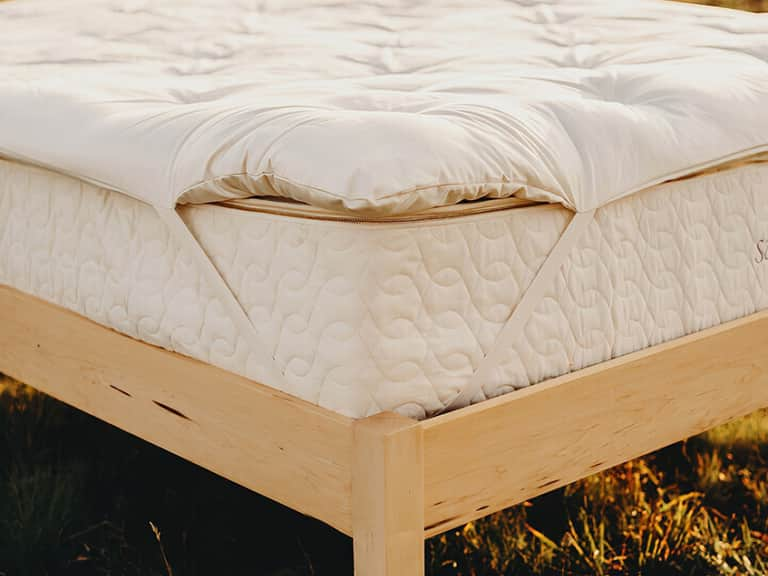
Check the cover as carefully as the core. A removable cover can make routine care more manageable, but it may not be washable; follow the care label. A cover’s knit, weave, and thickness also influence handfeel and the way the layer sits under a sheet. A soft cover can make the surface feel more finished, while a heavier one may add structure. Details such as corner straps or a fitted skirt can help keep a layer in place, depending on mattress design and construction.
Fit: the quiet detail that makes the whole bed work
Even a well-chosen layer can be frustrating if it does not fit. Begin by measuring the mattress, not just reading the size printed on its label. Confirm length and width, then measure its depth from the base to the upper surface, including any pillow-top or existing pad that will remain in place. Compare those measurements with the topper’s dimensions and any stated maximum mattress depth.
Then consider how the layer is secured. Some toppers rely on their weight and friction; others have corner bands, ties, or a fitted construction. A smooth, stable mattress surface can help prevent movement, while a slippery protector may make shifting more likely. Follow the product’s placement guidance and avoid assuming that a standard bed-size label guarantees a precise match across brands.
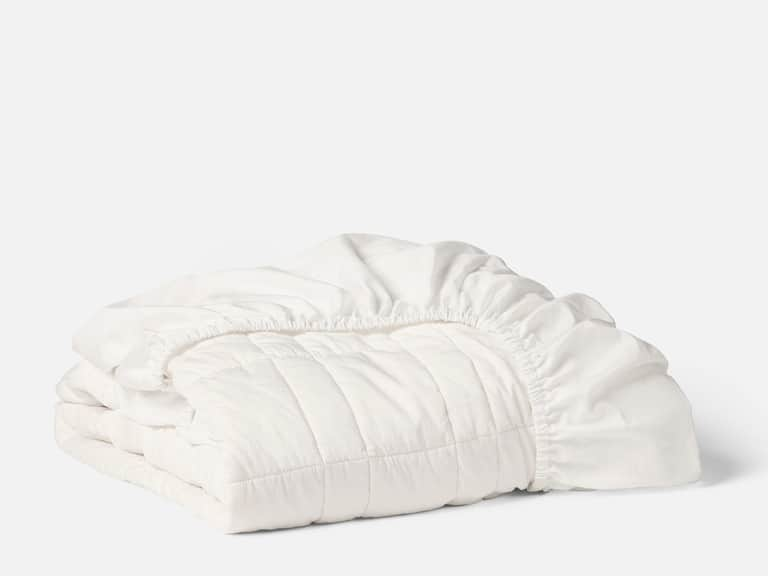
Sheets are part of the fit equation. A deeper mattress plus a latex layer can exceed the pocket depth of an existing fitted sheet. Before purchasing, check the sheet’s pocket measurements and whether its listed depth accounts for a topper. If the sheet is too shallow, corners may pop free. If it is extremely tight, the fabric can pull across the bed and reduce the relaxed feel you intended to create.
Adjustable bases and split mattresses bring additional considerations. A one-piece topper may not move as neatly on a split setup, and a thick layer can affect how the bed articulates. Verify compatibility with the mattress and base manufacturer, especially if the mattress warranty has specific requirements about added layers, ventilation, or support.
Latex topper, mattress pad, or protector?
These terms describe different functions, even though product naming can overlap. A latex topper is generally intended to change comfort through a thicker cushioning layer. A mattress pad is typically a lighter layer that may add softness and absorb everyday wear. A protector is primarily designed to shield the mattress from spills, perspiration, or other contaminants; its performance depends on its materials and construction.
One product may combine features, but do not assume that a latex comfort layer is waterproof or that a thin pad will materially change mattress firmness. If you want both a more responsive feel and spill protection, you may need separate layers. Check the order recommended by each manufacturer and consider how the combination affects airflow, movement, sheet depth, and the texture of the bed.
For those comparing latex with other sleep layers, wool and cotton offer different experiences. Wool-filled pads are often chosen for their soft, dry hand and ability to manage moisture, while cotton layers can provide a familiar, washable surface depending on construction. These are not direct substitutes for latex: a fiber pad may refresh the surface, whereas a latex topper is usually selected for a more substantial change in cushioning and bounce.
Care, longevity, and everyday handling
Care requirements vary by latex type, cover, and manufacturer. A latex core should not be treated like an ordinary washable sheet. Many are spot-clean only and should not be soaked or placed in a washing machine; others may have a removable cover with its own instructions. Always follow the care label, and let a damp surface dry completely before putting it back on the bed.
Regularly washing a compatible protector or sheet can help keep the sleep surface fresh without exposing the topper itself to unnecessary moisture or friction. When changing bedding, inspect the layer for shifting, damage, or signs that it is no longer returning evenly after compression. Rotate it only if the manufacturer says it is suitable for rotation; not every construction is designed to be flipped.
Latex is resilient, but no comfort layer is immune to wear. Sunlight, heat, improper storage, and unsupported edges may affect materials over time. If storing a topper, keep it clean and dry and follow the maker’s guidance about rolling or laying it flat. Avoid folding it sharply unless that method is explicitly permitted. Warranty terms may also specify the foundation or mattress conditions required for coverage.
If you have a known latex allergy or sensitivity, consult a qualified healthcare professional before choosing a latex bedding product. Product composition and exposure can differ, and a retailer’s general description is not a personalized health assessment. The same careful approach applies to certifications: verify exactly what a certification covers and whether it applies to the specific product and component you are considering.
A practical selection checklist
Before making a decision, take a moment to map the bed you have to the bed you want. A considered choice is often less about finding the most elaborate specification and more about avoiding a mismatch.
- Name the problem. Is the bed too firm, too yielding, or simply lacking the responsive feel you prefer?
- Consider your sleep position. Think about where you feel pressure and whether you prefer a close cushion or a more level surface.
- Choose a change in scale. A subtle adjustment and a pronounced comfort transformation call for different thicknesses.
- Compare firmness in context. Look at how the layer may interact with your mattress, rather than treating a firmness label as universal.
- Review composition and construction. Check material descriptions, manufacturing details, cover design, and any certifications that matter to you.
- Measure the bed. Confirm mattress width, length, depth, and any existing layers that will stay underneath the topper.
- Check sheets and support. Make sure fitted sheets can accommodate the new height and that the mattress foundation is appropriate.
- Read care and return terms. Understand cleaning limits, trial conditions, warranty requirements, and what happens if the feel is not right.
The final measure is how the bed feels
Latex can bring a distinct combination of cushioning and lift to a sleep surface. The most satisfying result usually comes from balancing three decisions: firmness, thickness, and fit. Choose a softer feel when you want more give, a firmer one when you want less compression, and a thickness that matches the scale of the change you hope to make. Then make sure the layer works with your mattress, sheets, protector, and care routine.
Airflow, resilience, and materials deserve attention, but they are part of a larger equation. A breathable construction may be appealing; a responsive surface may make movement feel easier; a secure fit may keep the bed looking composed. None of those features can guarantee universal comfort. The aim is not to build the most complicated bed, but to create a sleep surface that feels balanced, practical, and pleasing night after night.
Approached with clear expectations, a latex sleep layer becomes a thoughtful adjustment rather than a speculative fix. Measure first, compare carefully, and let your own comfort preferences guide the final choice.